

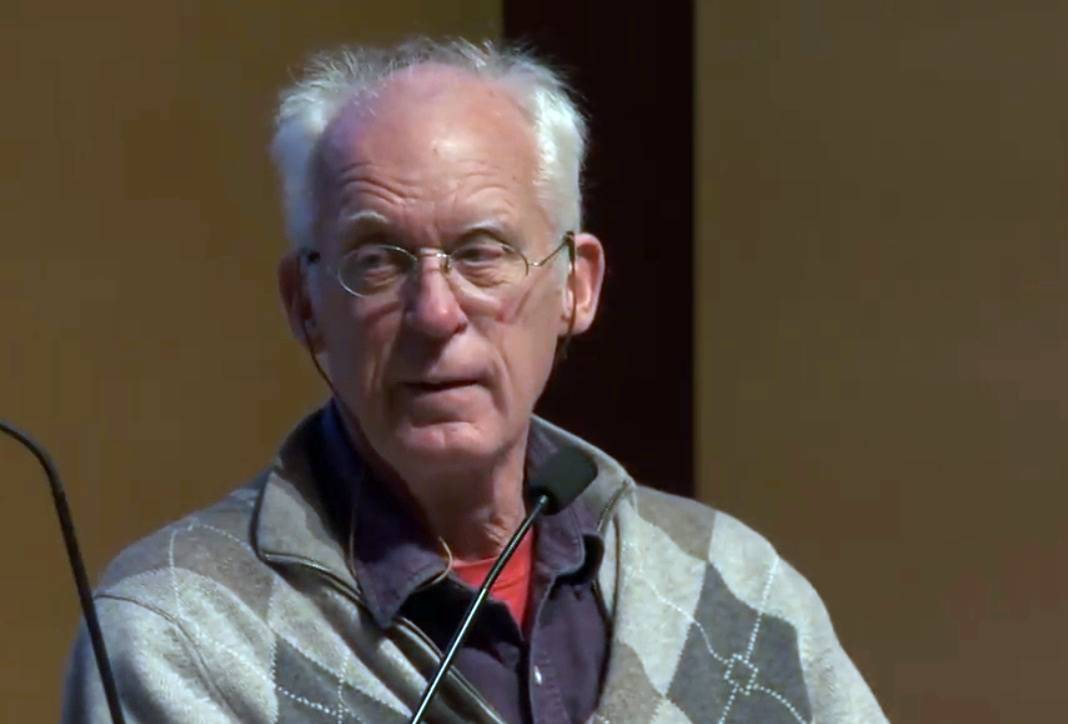
Jon Jost, avant-garde filmmaker: It just so happens that I’m allergic to money. All the people you have to deal with to get more money are assholes, and I don’t want to be around them. I stopped paying taxes after I got out of prison because I didn’t want to give the assholes who put me in prison my money to fund their fucking wars. In the real world, the worst always come out on top. Now they have a button to wipe out the planet, and they will.
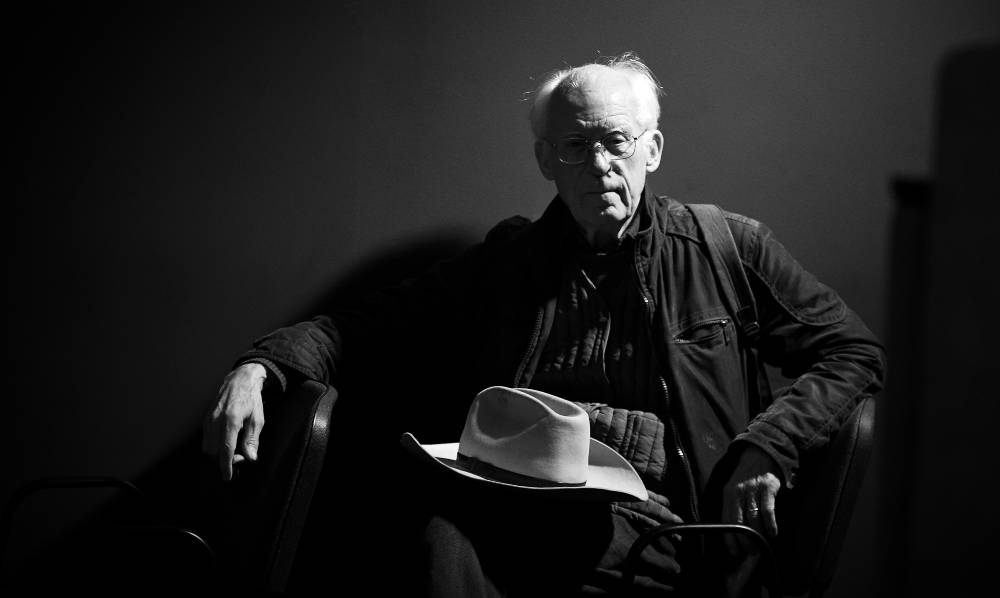
Few filmmakers dare to set sail on the precarious waters outside the dominant film industry, and even fewer afterward have the courage not to adjust their vision to the expectations of audiences and investors. At the very top of the pyramid, more independent than the independents, stands Jon Jost. The Chicago-born avant-garde director counts over fifty completed films in sixty years of his career, mostly created by unconventional methods and on a minimal budget. His expression is characterized by experimentation with form, an improvisational approach to plot and dialogue, the use of actors without prior film experience, and a deep commitment to social issues. The latter marked his youth because he spent two years in prison for refusing the draft, after which he was active in anti-war protests of the ’60s and ’70s.
Although his decades-long consistency in the uncompromising search for new modes of expression has earned him cult status within narrow filmmaking circles, he still remains on the margins of the avant-garde canon. The 19th edition of the festival “Film Mutations: Festival of the Invisible Film,” held from November 13 to December 3 in Split, Zagreb, Tirana, Ljubljana, and Rijeka, seeks to correct this injustice. Organized by film curator Tanja Vrvilo, a significant part of Jost’s oeuvre is being shown throughout the region, together with conversations with the director. The Rijeka audience will be able to witness the life and work of “the iconoclast of radical alternative film in economic, aesthetic, and political terms” at Art-kino from December 1st to 3rd, while the Zagreb audience had this opportunity from November 21st to 26th at Kino Kinoteka. On the occasion of the event, we spoke with Jost about his approach to film, the contradictions of the film industry, and the current socio-political moment in which the world has become entangled.
Since your first film, made on virtually no budget, you’ve shifted eclectically between genres and styles, yet one thing has remained unchanged. You’re known for making films on almost no budget and for doing most of the behind-the-scenes work yourself. Is this a programmatic approach to creation, or simply a matter of circumstance?
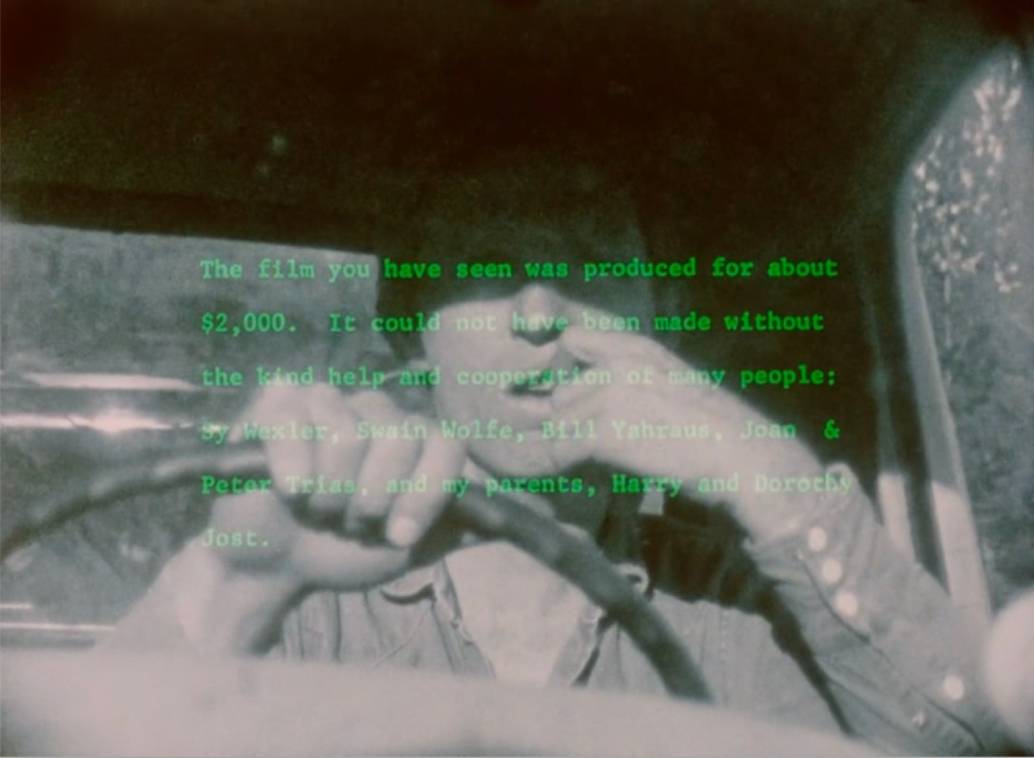
It’s a matter of circumstance that I’m allergic to money. Sure, it would be nice to work with more money, but all the people you have to deal with to get more money are all such assholes and I don’t want to be around them. Fortunately, most of the time I’ve managed to do it.
I’ve had some really bad experiences. I was supposed to make a film in Vienna and the guys were just crooks. I raised $750,000 on my name at that time, and I had to use a production company in Vienna. It was all corrupt, these producers thought I would be happy with 150 of the 750,000 and they would just pocket the rest. I shot a quarter of the film and stopped. I wrote the people who gave the money in German television and told them “Get your money back.” But I don’t think they did. Partly because this is just perfectly normal in the European film industry. I don’t need money and I don’t want it. On another level, yes, it’s programmatic cause I find every extra person just makes it take more time. Now with digital filming, I don’t even have a sound person usually. I do everything myself and that makes it much faster and much cheaper, cause I’m always free.
The press release states that you work under the ethos “to live is to be political.” How does this manifest in your work and in your life?
I’m a tax resistor, which has meant I couldn’t get a job in America. I became one when I got out of prison, cause I wasn’t going to give the fuckers who put me in prison any of my money to pay for their fucking wars. This put a severe limit on what was possible for me, it was what I had to pay in order to feel ethical inside of myself. All those things are political. Everybody’s political all the time.
Yet your movies are as much politics as poetics. You’ve said that you see filmmaking as constructed music, and the connection between music and film is evident in The Last Chant where your country songs are featured. Could you elaborate on this link?
Music doesn’t have to have any words or story in it, and that’s one of the things that’s interesting about it. Nearly anybody can be hooked into completely abstract music, but the same person looking at an abstract painting won’t be. To me, it’s like you’re composing a sequence of movements. I don’t think of this when I’m doing it, only in hindsight. You end up with a bunch of movements that belong together like a symphony. I don’t do transition shots. Here’s this and that – you put it together. And that’s kind of like music, an ongoing flow. If you show me a movie that shows you from my shoulder then you cut back to me, I’m done. I’m just not interested in that, it presumes that the viewer is stupid. And I don’t like to be insulted like that.
On the subject, it’s interesting your films we’ve seen today rely on classical narratives, but are disrupted by experimental form — double exposures, long shots unrelated to the plot, frenzied color shifts. Where does this impulse to dissolve form within classical storytelling come from?
Boredom. If you were to watch all my movies, you would say they can be quite different from each other in nearly all aspects. Other filmmakers, auteur filmmakers, just do the same thing again and again. I have a landscape film, I have an essay film, a narrative film, a completely abstract film, and they’re all equal to me.
In general, people who work with a script are basically turning themselves into a very exotic photocopy machine. I don’t want to be a photocopy machine. Normally, my films start and I don’t know where they’re going to go until I have things in front of the camera. They tend to go to the same place, somebody dies. I don’t know how to talk about life if I don’t include death in it. And if you don’t, in a way it’s frivolous: “Oh, well, let’s pretend death doesn’t exist.” Well, have fun. I remember reading about Michael Haneke making a film that was a big art house hit. Then Hollywood told him to come make it with Hollywood actors in a different setting. He went and made exactly the same film. You could pay me a billion dollars and I wouldn’t do it.
So it isn’t just boredom, there’s an economical imperative for directors to make confectional movies.
A lot of them, whether it’s conscious or unconscious, are concerned about making money. In the art world, in any world, doing the same thing is how you make money. It gets in people’s brains. Does Steven Spielberg really think outside of his ball park? Most people, by the time they’re 18, have already been brainwashed. Particularly filmmakers, who are going to be filmmakers in the real sense, not somebody like me. Most movies begin with money being spent to make money. All these people make these totally uninteresting, boring, conventional movies and they’re doing it because they can go to somebody and say “this will sell. Therefore give me the money to make it”. It’s so embedded that they don’t even see it. Those people actually think they’re making art and they’re just investing in something to make more money.
On the other side of the spectrum your films dance between improvisation, documentary, and fiction. How do you view the relationship between film and truth?
I guess I would invert Godard’s ”movies are the truth 24 times a second” to a lie 24 times a second. It’s always a lie. One of my most recent films, The tourist, discusses this. In part, it’s a discussion on one of the functions of art, which is to try to get at the truth through a lie. This is, of course, an inherent contradiction.
This sounds like a Platonic critique of aesthetics.
Since you bring up the philosopher, we’re so deep in Plato’s cave right now, we’re never going to get out and AI is the is the final nail in the coffin. Let’s have an imaginary world so real that we can’t tell which is the real one. We just went to the other side and we’re never going to get out. The end result is you detach yourself from reality. But reality’s going to bill you. I think the human species has 100 more years maybe? Or less?
When I was a kid, if you were in the Midwest and you were driving out, you had to stop periodically to wipe the bugs off your windshield. Doesn’t happen anymore. Who eats the bugs? Birds, fish. So we’ve systematically destroyed the whole infrastructure of life. A lot of this is because we have become so detached from reality. Most people don’t know how reality works. An urban person in America goes to the store and for all they can figure out meat comes out wrapped in plastic.
Although your work doesn’t always explicitly take on these social and political themes, social issues seem to drive your narratives and characters. Does art have a responsibility to carry an activist dimension in its content?
Once upon a time, 30 years ago, if you would ask me that question, I would say, “Yes.” And now I say, “It’s just what I do.” I can’t not do it. All my films are political, but not on the surface. Like I said with The bed you sleep in, It’s not about this little family for me. It’s about my big family, my country. When I was younger I thought if I make films of a certain kind that are critical of society it might really change something. Move things just a little bit, if I could just do a little bit along with other people. And that was all a delusion. I have a number of my older friends, who were arguing against the system. But look at the world around you now, it’s 10 times worse. You didn’t do anything to make it better.
You comment on this at the end of Plain talks, saying how freedom of speech in a system that has dominant media doesn’t mean anything because your message can’t get out. With the rise of the internet and new media, has the possibility of free speech and the spread of radical ideas/art outside dominant systems become easier?
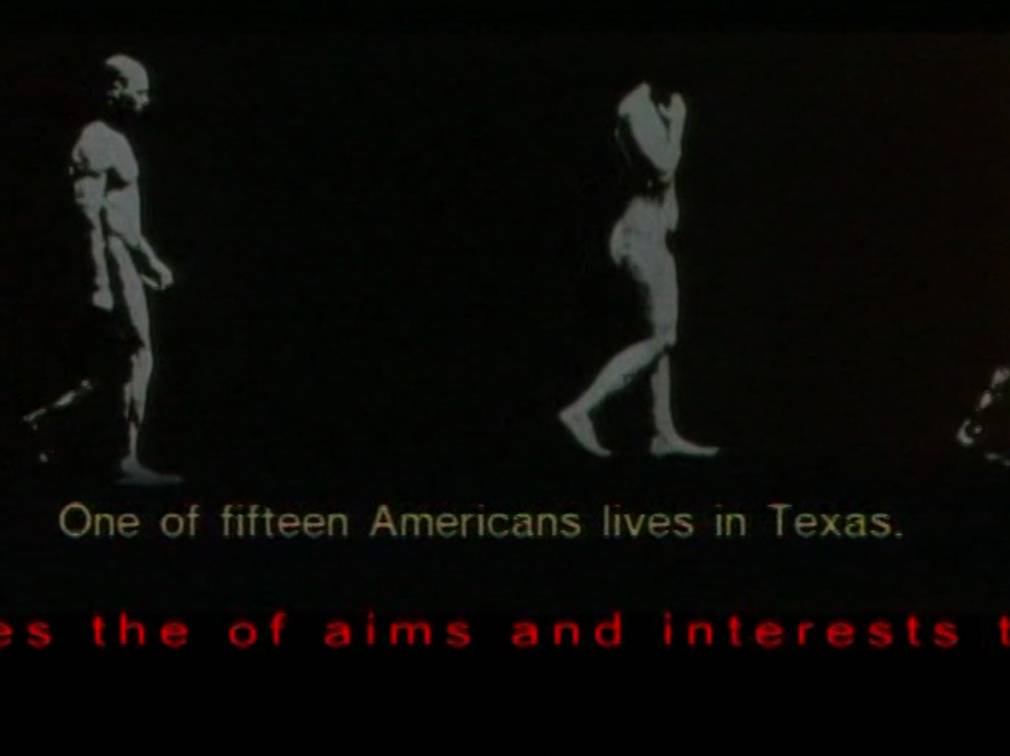
They’re not gonna tell you you can’t speak, they just don’t give you any room to be heard. Another contradiction. I’ve heard this all my life as a filmmaker. “VHS! Now we’ll be able to bypass the structures.” And if you go in the stores, they sell 1000 ft of Hollywood and maybe a little shelf with five little independent things. They said VHS will change it, but it didn’t change a thing. Now the internet will change it… I write a little essay on Facebook, or some blogs. I have a coterie of seemingly constant readers, 500 people may read them. But that’s nothing next to the 50 million people who are influencing on TikTok.
It’s getting interesting because right-wing politics have figured out how to use the internet. All this media stuff is certainly played into their hands, doesn’t seem to have done so for the left wing. Way back when, we had something in America called News Reel that was set up in ‘68 and it was a left-wing attempt to make something that would become Fox News. Except, the left wing doesn’t have the puck. The other problem is left-wing people are are much less likely to agree with each other.
You were active in the anti-war protests of the ’60s and ’70s and even spent time in prison for draft evasion. Can you draw parallels with that time?
There’s some vague similarities, but it’s really not the same set up. In one way, it’s much worse now. America is a collapsing empire. Historically, collapsing empires go into a dictatorship, kill a lot of people, and then they fall in place.The bed you sleep in was made in 1993 and I was saying then America’s totally corrupt. Most Americans would have laughed at you if you said that. Now the major people say “yes, we’re totally corrupt” and it didn’t just happen because Trump snapped his fingers. It happened because for 30-50 years you’ve been getting more and more corrupt and hiding it in the back room, and now it’s out front. But you don’t get to where we are without already having been totally corrupt. I’ve also been part of organizations and even on a co-op with ten people involved. They all do the same thing. Somebody says, “I’m the one.” Doesn’t matter whether they’re left or right.
So you’ve become disillusioned with the idea of humanist and left wing ideas triumphing?
I don’t think I’m disillusioned because from early on I didn’t really think it was very realistic. It’s important to be truthful and if you look at humanity overall, its history and how it behaves, you see we’re an arrogant, sick species and we’re going to do ourselves in. The Greek sense of fate is you can’t change it. You are born with it and your fate is this is going to happen. Well, that’s my view of humanity. Ourselves are going to kill us. That’s what we’re doing. Everything we do, we’re killing each other. I’m flying on a plane. I’m killing us. I’m in a car. I’m killing us. I mean, anything I do in modern industrial society, I am killing us. You are, and everybody. Most people don’t want to see that at all, and they don’t. Who asks themselves where the precious metal from their phone goes when we throw it away? Go to some place, and we’re poisoning and killing a bunch of people with our toxic garbage.
Any advice you would give younger, politically active people?
There is no escape from it. The escape is in your head. Here’s another contradiction. I’m perfectly aware of what I’m doing, I’m not exempt at all because I didn’t pay my taxes. Doesn’t mean that I changed one nanogram of anything, it was just for me. We are a faded species, we are way too smart and clever but we still have a basic animal instinct. In the real world, the nastiest always rise at the top. Now they have a button that they could just delete the planet with, and they’re going to do it. There’s no question in my mind at all. We didn’t invest all this intelligence and vast wealth to build this system that can destroy itself. And you think it’s not going to destroy itself? I don’t, and we can’t do anything about it. So I don’t feel bad about it. I mean, can you feel bad about fate? You just accept it or you cannot accept it, but you not accepting it isn’t going to change it.
