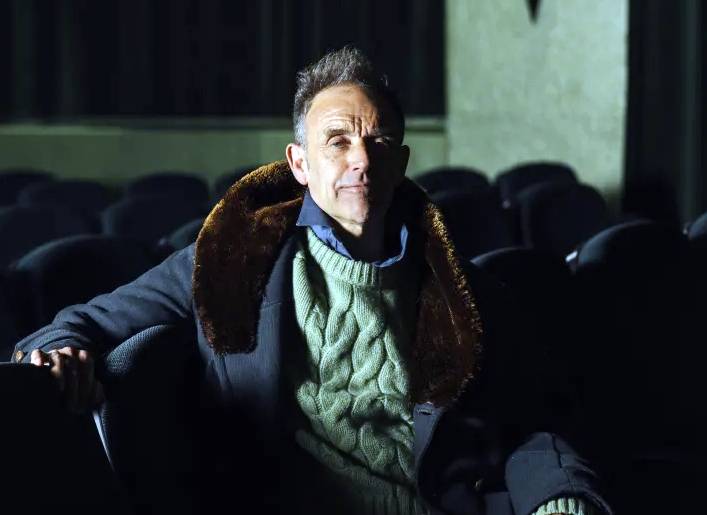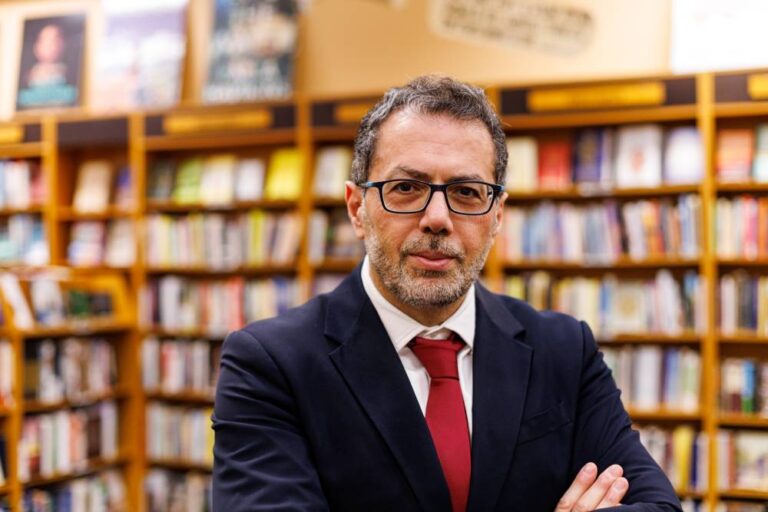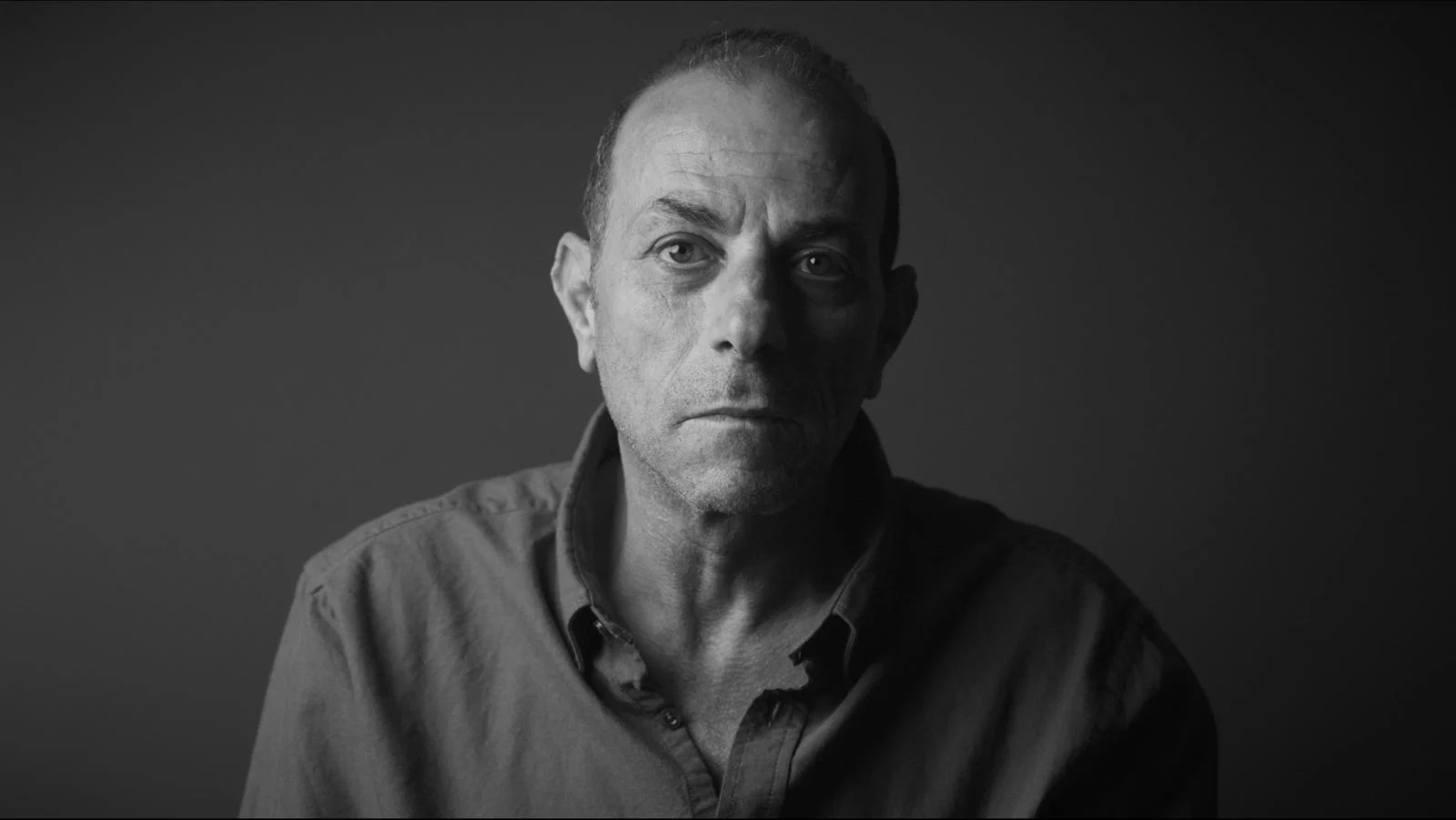
Hossam Al Madhoun, a theatre actor and writer from Gaza: Children in Gaza will grow with diseases and weaknesses which will be transferred to the next generation. Add to that the kind of trauma that is hitting the people, mainly the children living in these conditions. The majority of the problems shared with me are children turning very violent or aggressive, very isolated or having nightmares, wetting beds. Many children have suicidal thoughts, some of them commit suicide.
In the latest attack on Gaza, last Friday, another four people were killed, bringing the number of people directly killed since the beginning of the genocide to 74,618 and the number of wounded to 175,925. These figures do not include the victims of disease and starvation, which, according to research, number more than 16,000, bringing the overall death toll to over 90,000, including more than 20,000 children and over…
We could go on listing figures that are supposed to represent human lives, but after three years of a genocide broadcast live, it is difficult to imagine these lines having any impact. Yet this formal, positivist, cold and mathematical mode of reporting remains the dominant form of conveying information in the few places where Palestine is still even a subject of reporting (although it should be).
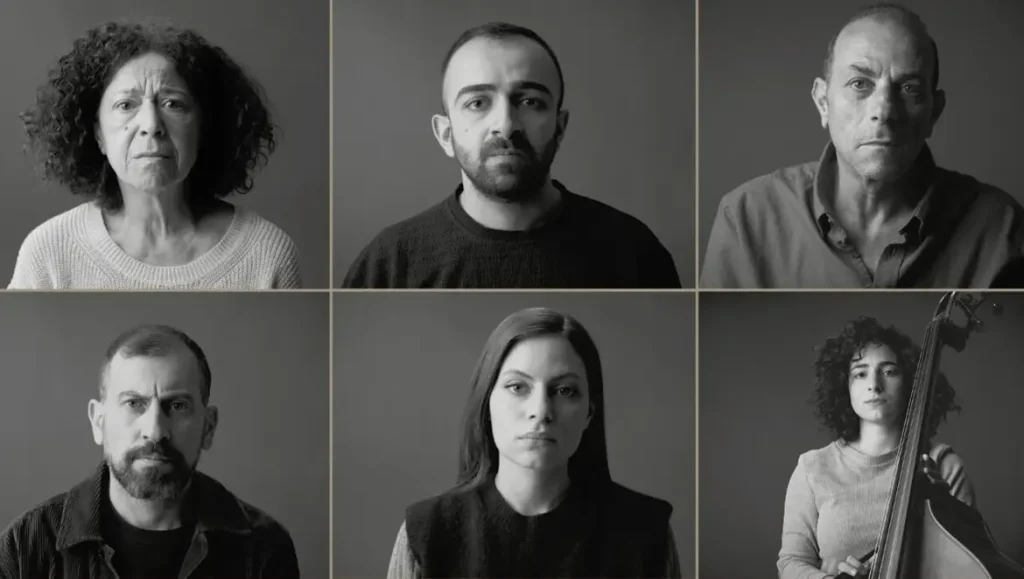
Gaza: Eyewitnesses is a new documentary film by director Salwa Nakkara, in which five actors read testimonies directly from Gaza, thereby bringing the perspective of reporting down to the ground in an attempt to overcome the detached way in which the genocide is represented. The film was screened at KIC’s Surogatkino on October 9, and on that occasion Hossam Al Madhoun, one of the actors involved in the project, was supposed to join the discussion via video call. However, due to technical difficulties, the conversation never took place. Al Madhoun is a theatre actor and writer who left Gaza six months after the beginning of the genocide. His work at the Ma’an NGO, where he works remotely in the field of child protection in Gaza, communicating daily with people on the ground, as well as his experience of living under genocide, give him invaluable insight into what all these figures represent. Due to his demanding schedule, with an eight-hour workday and the simultaneous development of a theatre production while caught in Cairo’s state of migratory limbo, we are only speaking with Al Madhoun now – three years and one month after the beginning of the genocide.
We hear a lot about how bad it is in Gaza, but this is usually communicated through numbers which don’t say anything about the lived experiences there. You even wrote a poem about this four years ago. How does the average day look like for a person in Gaza?
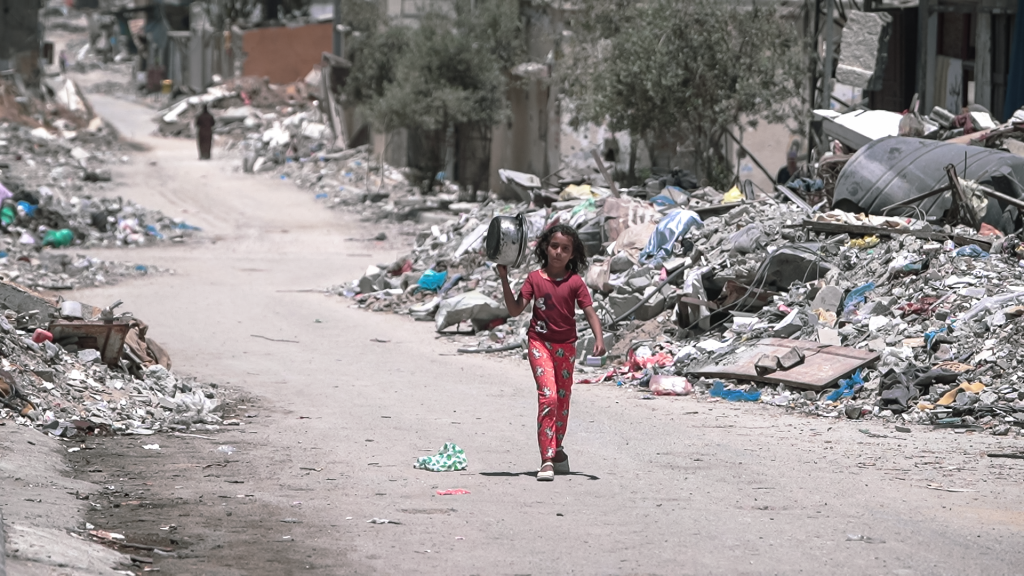
This is precisely what the Israelis are trying to hide. The media talks about demolishing, destruction, killing, injuring, enclosure, but under each of these words lies huge agony and humiliation and suffering of people in daily life which words cannot explain. When you say the word tent, for example, what comes to your mind immediately is a picnic in the forest, a camp, scouts. With a tent, you spend a few days in nature knowing that you still have your home and resources for all of the needs in life.
A tent in Gaza is completely different. There are tens of thousands of them beside each other, so the first thing you lose is your privacy. What separates you from your neighbor is just a piece of fabric and nothing else. In that tent, you don’t have a toilet, you don’t have a bath. Most of the people dig holes to do their business and have a pocket inside the tent to use for urination. Imagine this kind of life with your wife, your father, your mother, your children. Four square meters are the kitchen, the bedroom, the toilet, everything, and at the same time, you are unable to provide privacy, protection, food, water or health. Nothing.
How do the people satisfy their daily needs like food and water?
You have to run all day. The majority of your time is used just running and standing in rows to get some water, food or medicine. You don’t have water in the tap, because there is no tap at all. There are water-filling points every 100 or 200 or 300 metres where you go and stand in a line to fill 10 to 20 liters. This is the quantity that you must systematize so your family can use it for everything: hygiene, cooking, drinking, etc.
Same goes for the food, as now more than 95% of the people have no jobs because Israel destroyed everything. There are no factories, there’s no agriculture, there’s no fishing, no farming, no workshops, no carpentry, no mechanics, nothing… Anything whatsoever that could create any type of job has been completely destroyed. Although people are willing to work, there are no opportunities for work because there’s nowhere to work in. The people who are trying to make any kind of living are just selling things on the street whenever there is some food coming inside. This is almost zero income, so most of the people depend on humanitarian aid, which is interrupted by the Israelis. Very little quantities are entering. And again, this is another queue that you have to go to, stand and wait, hoping to get a food parcel for your family. This is how they tell the people to live. It is a systematic, slow-motion genocide.
It sounds like things have gotten worse since the so-called “cease-fire”?
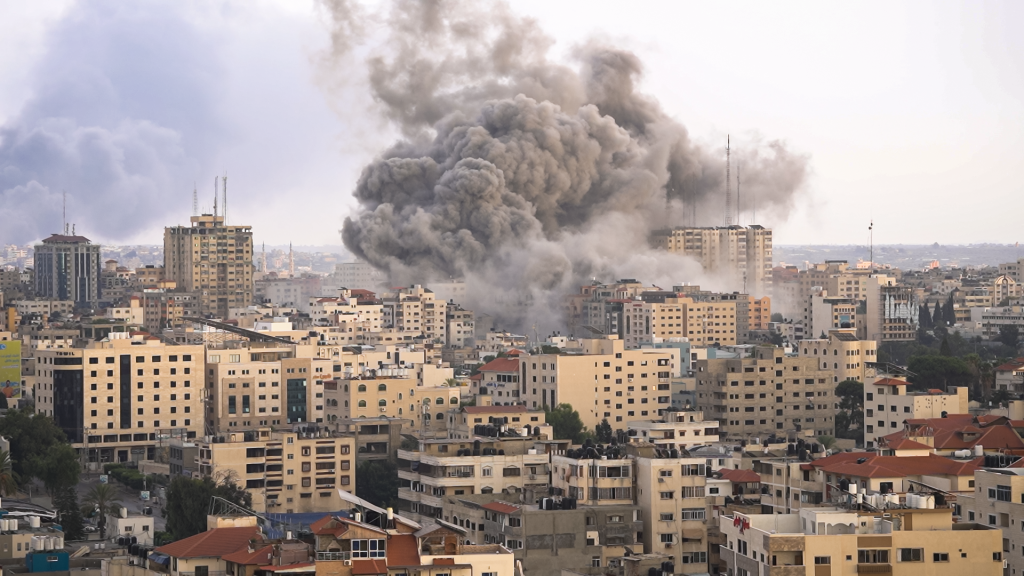
It’s bullshit, it was like a permission. This ceasefire of Trump is a permission for Israel to continue the genocide in different methods. That’s it. The Israelis respect and commit to nothing in the agreement. Until last October, they were directly mass killing 500 people per day, now they kill only 5, 7, 12. They never stopped killing, though. They never stopped any act of the genocide, only the number of mass killings. Otherwise, the famine, the agony, the humiliation, the arrests are continuing.
During the last month, they started bringing less and less food into Gaza where people were already starving. How many children are malnourished? How will they grow? How will the health of pregnant women be? What will the health of their babies be like? They will grow with diseases and weaknesses which will be transferred to the next generation. Add to that the kind of trauma that is hitting the people, mainly the children living in these conditions. Normally, after a traumatic incident, you develop a psychological resilience, or you fall into a post-traumatic disorder which needs intervention. In Gaza, the trauma is continuing. Imagine a child of 5 to 15 with all of this psychological stress… What kind of an adult will they be? What are they going to reflect on the next generation? This is a transgenerational genocide.
You also work with children, namely child protection in Gaza. How does this concretely manifest?
The majority of the problems shared with me are children turning very violent or aggressive, very isolated or having nightmares, wetting beds. Many children have suicidal thoughts, some of them commit suicide. This is especially true for children aged between 14 and 18. No one is talking about the hundreds of suicide attempts or suicides happening in Gaza every single day. They steal the hope from the people, they steal from them the purpose for life. Can you imagine living without a purpose?
They are really treating Gaza people as lab mice, practicing on them methods aimed at completely destroying them. For example, they will target the civil police claiming that it is Hamas. This creates a vacuum in the rule of law. The consequence of two million people with no law, no police, no prisons, courts, judicial system, etc., who are living through a famine, is the creation of a jungle. So the theft, the stealing, the raping, the kidnapping is happening as a normal result of the genocide, blockade, thirst, fear, killing, the prevention of more than 15,000 patients in need of health treatment outside of Gaza. They know what this does, they do it on purpose.
Are the people managing to organize around any of these problems?
They can’t. Israel bombs them. We have a very strong civil society in Gaza because we’ve always depended on ourselves and not on the occupation power. Gaza has the highest education level in Palestine and the Middle East. When there is the chance to evolve, when Israel stops the genocide, you will see people building their lives again tomorrow.
Does the legacy of Gaza’s civil society and culture survive even in the face of the worst atrocities imaginable? Many people wouldn’t include art and culture into the list of basic human needs, but the work of you and your Palestinian colleagues seems to prove otherwise.
A lot! Every single artist is using their art in Gaza, mainly with the children. They are so resilient, the artists. Plenty of activities are taking place every day despite the agony. Gaza is so small, we all know each other, and not one artist I know is staying home. Writers and painters create workshops, theater makers are creating and performing shows, filmmakers are filming… These activities did not stop for a moment during the last three years.
Since they work mainly with children, I suppose it’s to somewhat psychologically help them?
Absolutely. It’s also for flexibility, relaxation, communication, and building relations. They do it with the motive of helping people, it’s important work.
The list of active artists from Gaza includes you. What was your role in the Gaza Eyewitnesses movie?
I received a contact from Salwa Nakkara, a theater maker from Haifa. She was reading part of my testimonies and proposed I participate in the screening. I was supposed to travel to Berlin to join the team of Palestinian actors, unfortunately, the Germans, of course, rejected my visa, like the Belgians and the Dutch. So, the production team sent the cameraman to Cairo with one of the actors. Let’s say, 35% of the testimonies in the film are my own.
I seem to remember you mentioning in the film that it’s very obvious Europeans are automatically rejecting visas for Palestinians nowadays because the rejection letter comes too quickly.
Yes, exactly. It’s obvious the European Union decided not to give visas for Palestinians from Gaza. Although I’ve been to Europe many times, in many countries, the last time I was in Belgium itself was on April 23rd, just a few months before the genocide. They reject our visas all the time.
You mentioned your visa was rejected even though you made a co-produced play with Belgian actors. What can you tell us about the play itself?
We used to tour Belgium for more than 20 years. So, we built relations and friendship with other theater makers in Belgium who visited us a year ago in Cairo. They proposed to make a play about Gaza. I said yes with the condition that we are not going to talk about things in the news. I wanted to talk about people’s lives under the genocide. To tell people what it means to live in a tent. The whole city is made of fabric. Your neighbor hears the sound of the water in your throat, the whole camp knows the time of your bath, what you cooked today or if you are constipated. Your fears, your nightmares, your hallucinations are in public. The play will be about what this means in a poetic, a beautiful way.
Parts of the scenes are prepared by the actors from Belgium, mainly about how the West is perceiving what’s happening in Gaza with a critical eye. Since our visas got rejected, my friend Jamal and I filmed our scenes and now they are mixing their scenes with our scenes. There will be acting and there will be screening for us. There might be an embodiment of us by them on the stage.
You having to be pre-recorded in your own play because you couldn’t get a visa is also poetic in a way. It shows how the West continues to be enthusiastically involved in the genocide.
This complicity of the West is, for me, really the main crime. I met with the foreign minister of Holland and the Belgian envoy for the Middle East here in Cairo. They wanted to hear about Gaza. I said, “I’m sorry. You are hypocritical. What do you want me to tell you? That they are killing, that they are destroying, that there is a blockade? You already know that! But do you know that a 14-year-old girl, who might have her first period, won’t have privacy or a hygiene kit or water? Her mother will stand there unable to do anything to help. Imagine your daughter in such a situation… but this is happening to thousands of girls every day in Gaza. Nobody cares.”
The Israelis drag the whole world to discuss these irrelevant details. There are standby generators operating the hospitals. They don’t allow engine oil inside. So the whole world is debating if Israelis should allow engine oil to repair the generators in order to keep the hospital running, rather than obliging them to put a complete end to the genocide and open the borders for all the human needs. We are now approaching the winter season, more than 200,000 tents are melting. It is a piece of fabric, the weather in Gaza is very hot and humid in the summer and very rainy in the winter. Any quality tent will not last for more than a year in this weather. Now all of the 200,000 tents will not stand the winter, but they do not allow the new tents to enter.
I’m… really sorry. This is awful.
The word awful is meaningless. You know, words are really crippled, disabled, they can’t describe this. It is the theft of lives from two million people. It’s the theft of their future. It’s the theft of today. They destroyed the education. Now we have TLS, temporary learning spaces. The children sit on the sand inside a big tent and we provide them with the very primary education, mathematics, Arabic, physics and so on. They receive only 15% of the education they should, and it is reaching 45% of the children. Even less, because there is no space to build a huge TLS since Israel took 70% of Gaza. They are still taking it, from day to day they expand what they call the yellow line, squeezing people in this area. Gaza was already the most crowded place on Earth before the 70%.
And the world knows this. The West, America, especially Europe, know these details. They know the implications of this, they know that this is a genocide. The so-called international community are the criminals. The European legacy – human rights, international humanitarian law, the Geneva Convention, the Children’s Rights Convention, the ICC – has been bombed when they bombed Gaza. They destroyed that legacy when they destroyed Gaza purposefully. It would be very naive to think that if Israel is allowed to do it today, it won’t be allowed to happen somewhere else tomorrow. Five hundred years ago, Europe was underground. What we learn from history is all great powers disappear, and the power of the West will disappear one day. I don’t want their grandchildren to pay for this complicity. I don’t want any human being to suffer, but with their complicity, with this genocide, they will allow harm to their descendants.
Many of us that are watching want to help, but don’t know how. What do you suggest?
Wake up your government, the political elites in Europe and in America. Their nations will pay the price for this one day if they don’t wake up. Knock on the doors of your parliament members and persuade them to take a stand. Financial support through NGOs and individuals still helps. The NGO I work for is in child protection, shelter, food security, water and sanitation. You can support certain families or children, especially the orphans. There are 60,000 of them, 20,000 who lost both parents. They are suffering the most, they need years to be supported, not just once.
Otherwise, I don’t know, educate the people as much as possible. Knowing what’s happening in Gaza is not a Palestinian cause anymore. It’s a human race cause. You have to fight against it not for us, but for your sake as a human being. No man is an island. As individuals, we are all part of the whole. What’s happening to me must affect you, what happened to you must affect me. We need to unite as a human race against these atrocities, whether it’s in Ukraine, Sudan, Gaza, Congo or any place. We must not allow it because, if we keep silent, eventually it will knock on our door.